BA (Hons)
Undergraduate - Level 4,5 & 6
Electronic Music
Production
An industry-focused BA (Hons) Electronic Music Production degree designed to equip you with the skills needed to create, produce and perform high-quality electronic music.
Key Information
Where can I study?
Bristol / Manchester / Plymouth
Start Date
September 2024
Study Modes
Full-Time
Course Length
1 Year
UK/Home Fees (Per Year)
£9,250
Course Overview
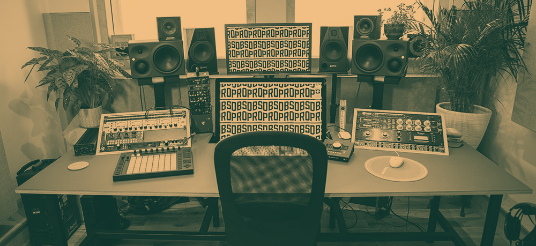
Our industry-focused degree course in Electronic Music Production covers essential and advanced composition and production techniques, giving you the skills to produce high-quality electronic music at a professional level. The course embraces a diverse range of styles and genres, welcoming aspiring producers from all musical backgrounds. You’ll get hands-on with state-of-the-art equipment and facilities including synthesisers, effects processors, controllers and Digital Audio Workstations (DAWs) including Ableton and Logic Pro. As well as developing your skills in processing, sampling, mixing, and mastering, you’ll experiment with live electronic performance technologies and explore how to create your own immersive audio experiences.
But this course isn’t just about technical skills, you’ll explore idea generation, workflow, and project management, which will enable you to be productive with your skills and prepare you for a career in the music industry. You will also learn about the various revenue streams available in the music industry, equipping you with the skills needed to take advantage of these revenue streams and helping you to identify new opportunities for income generation.
Throughout your studies you’ll have access to a substantial guest lecture programme with topics ranging from demonstration and instruction in new technology to personal viewpoints and techniques from experienced professional practitioners.
This course is taught by the dBs Institute and awarded by Falmouth University

Course Details
You will study a total of 18 modules, including a final major project. Programme structures and modules can change as part of our curriculum enhancement and review processes.
Year 1
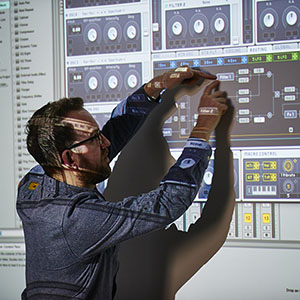
n Year 1, you’ll be introduced to the fundamental skills that make a great electronic music producer through practical and theoretical study. You’ll grow as a composer and producer, exploring new techniques in mixing, synthesis and sound design and deepen your understanding of the variety of ways that an electronic music producer can forge a career in the audio industry.
Module Details
- Studio Practice – We’ll take you on a deep dive into the inner workings of a professional recording studio, exploring the fundamentals of studio practice and the tools used to record music in a professional studio environment. The module looks at the system design and signal chain within the studio, as well as examining hardware and software systems. You will develop an understanding of how these elements work together to create a successful recording project with production skills.
- Electronic Music Production – We’ll introduce you to the core techniques and principles, allowing you to build a solid grounding in the electronic music production process. You’ll look at a wide range of workflows and compositional strategies and explore the tools at your disposal as a professional electronic music producer. You’ll develop an understanding of the historical context around electronic music production, explore the rich diversity of work within it and will be introduced to research materials that will act as a stepping-stone for your own required research to drill into your specific niche.
- Production Analysis – Understanding the theory of music production is a key part in your creative development and this module will see you analyse a variety of musical and sonic examples from a range of styles, while also considering the cultural influences at play. You will be encouraged to listen to music/sound critically and develop a wider vocabulary of descriptive and technical terms with which to explain production techniques clearly and accurately.
- Mixing – Focusing on the concepts and processes surrounding the mixing of audio, you will examine mixing from both a creative and technical perspective alongside key practical techniques, how to communicate your ideas and develop your professionalism when working with clients.
- Synthesis & Sound Design – This is your opportunity to develop your practical sound design abilities and demonstrate creativity and innovation in the use of synthesisers, samplers and effects processors. You will also be encouraged to develop skills using a range of different forms of synthesis and identify the processes that best fit your creative workflow. We will also introduce you to a range of creative sound manipulation and generation techniques, equipping you with the knowledge and understanding of current and developing practices.
- Industry Foundations – Introducing you to the key factors of the sound and music industry, you will develop an understanding of the vital and integral factors related to income and revenue, copyright and royalties, contracts, publishing, synchs, streaming and digital consumer platforms and formats (e.g. NFTs). You’ll examine the creative contexts of the industry, communication techniques for pitching and presenting projects, self-assessment, time management and establishing short and long-term professional creative goals.
Year 2
In Year 2, you will expand upon the core techniques and theories learned in year 1 and begin to develop a more advanced set of skills. You’ll be introduced to hardware production and how that differs from producing in-the-box, explore the innovative world of immersive audio and how this can translate into your own works, and develop your live performance skills. Your industry knowledge will grow through the examination and completion of commercial projects and you’ll conduct a research project which will provide the foundations for one of your final year projects.
Module Details
- Hardware Production – We’ll unpack the world of hardware production in the field of electronic studio and live production, allowing you to develop your skills using modern DAWs and outboard equipment alongside communicational skills, conceptual frameworks, connectivity methodology, multi-track recording, collaborative working processes and your own ability to innovate.
- Immersive Audio – Immersive audio has evolved to encompass a wide range of applications, from audio capture techniques to mixing, mastering and listening experiences to video game applications, such as AR/VR. This module allows you to develop skills in the application of immersive audio processes, including spatial/object-based audio and surround sound mixing for a range of applications, not least emerging listening experiences for consumer platforms.
- Advanced Mixing & Mastering – Building on the skills learned in the mixing module in year 1, you will look at more advanced mixing techniques and gain a more comprehensive understanding of this area of audio production. You will also develop skills in mastering, allowing you to effectively add the final touches to a range of audio projects, making them ready for a variety of platforms, such as streaming and physical formats.
- Electronic Music Performance – In this module you’ll learn how to take your productions from the studio to the stage through a combination of software and hardware tools, such as launchpad controllers, drum machines and synthesisers. You’ll not only develop tracks for live performance, but develop your skills as a performer; learning how to effectively multi-task and improvise a performance based on audience engagement and environment.
Year 3
In year 3, you will have the opportunity to channel everything you’ve learned in the first two years into a series of larger projects that are directly linked to your niche within electronic music production. You’ll be given the freedom to identify, research and realise a project that resonates with your passions and specialisms, alongside a more experimental and innovative approach to music/sound creation. You will also produce an extended research project, which can take the form of either a full written dissertation or a practical research project.
Module Details
- Innovation: Exploration – This is the first of two modules that run consecutively over two semesters. Exposing you to the rich and diverse history of innovation in sound and music, you will be encouraged to push your own sonic and technical boundaries with the aim of creating a space for creativity and innovation to flourish. You will be introduced to a wide range of new concepts and will learn how to embrace and apply creative risk, looking at the potential benefits of incorporating this into your commercial and artistic public profile. You will explore innovative compositional skills and fresh perspectives on sound and music working towards a portfolio of practical work.
- Professional Portfolio: Development – This is the second of two modules that run consecutively over two semesters. It will allow you to focus on your specialist area of practice by conducting self-directed planning and development towards final major production work aimed at commercial consumption. At this stage of the process, you will be conducting research relating to your area of focus, enhancing your existing practical skills that you may form part of your production process, and presenting comprehensive research material to your peers for critical discussion, thereby outlining your plans and commercial direction.
- Investigation – In this module, you’ll be planning, developing, and proposing a research project related to sound or music in an area that interests you. You will outline what you want to explore and start investigating how you’ll go about doing it. This module will help you lay a solid foundation for your upcoming extended research project and give you a head start on tackling it!
- Extended Research Project – Here’s where you’ll carry out and complete the research project you planned in the Investigation module. You’ll follow the methods, aims, and objectives outlined in your extended research proposal and work on either a written research project or a practical research project. This module allows you to dive deep into your chosen area of sound or music, showcasing your skills and knowledge through a comprehensive research project.
- Innovation: Realisation – Drawing upon the work you did in the Innovation: Exploration module, you’ll apply innovative skills to create a large-scale, practical project. You’ll also learn about commercial revenue streams related to sound innovation and how to develop professionally. Embrace an open mind, as you’ll be encouraged to discover new creative and technical approaches.
- Professional Portfolio: Delivery – In the second half of your third year, you will develop an impressive portfolio that demonstrates your electronic music production skills. You’ll combine the knowledge you’ve gained throughout the course and apply advanced techniques to create a collection of work that’s ready for the professional world. As the culmination of your career plans and creative output, this module empowers you to confidently move forward in your electronic music production career.
How You'll Learn
You will be developing your core sound as an electronic producer, learning the fundamentals of audio production and recording through a mixture of DAW and studio-based sessions. You will become adept with a range of hardware instruments and controllers, and nurture your live performance skills through practice-based workshops, and learn to evaluate and improve your work through both group and individual tutorials. Regular learning will come from lectures, seminars and our Virtual Learning Environment. In addition your learning will be supported by:
You will learn through:
- Lectures and practical workshops
- Masterclasses and guest lectures
- Group and 1-2-1 tutorials
- Access to extensive studio facilities and bookable equipment
- Use of library resources and study spaces
- Access to our Virtual Learning Environment
- Access to supporting online resources including videos, reading and interactive activities
Assessments are 100% coursework, submitted in an electronic format to our virtual learning environment, and designed to reflect professional practice.
On average you should allow for between 40 – 50 hours per week for your studies of which approximately 25% will be taught (c.10 hours) and 75% will be self-study.
Why Choose dBs
Here at dBs Institute, we pride ourselves on creating a learning environment that reflects the industry that you want to work in. Our state-of-the-art facilities ensure that you are working on professional-grade equipment; our course leaders have years of industry experience to draw from and we foster a community of students and staff that inspires and encourages collaboration. Throughout your studies and beyond, we will also provide you with career support and guidance to reach your future goals.
Facilities
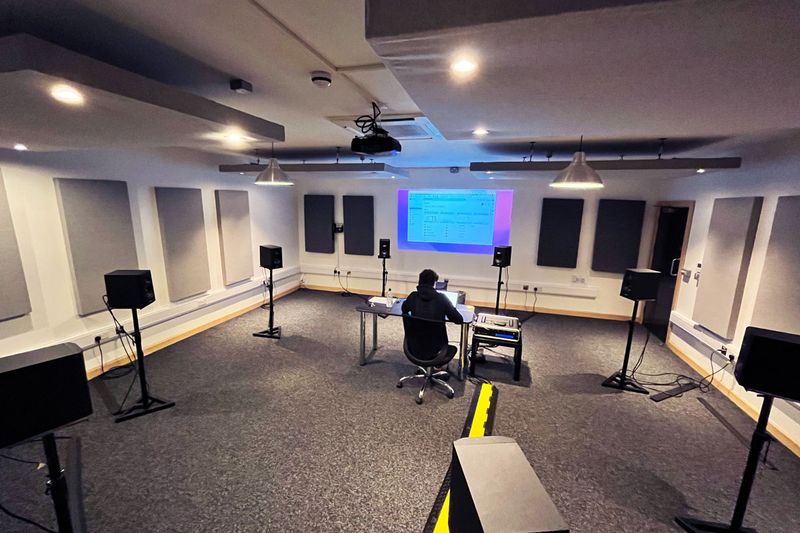
- Bristol
- Our 8.1 Spatial Audio Lab
- Bristol
- Our 8.1 Spatial Audio Lab
- Bristol
- Our 8.1 Spatial Audio Lab
- Bristol
- Our 8.1 Spatial Audio Lab
- Bristol
- Our 8.1 Spatial Audio Lab
Tutors

Adrian Stretch
BA (Hons) Electronic Music Production Course Leader
Electronic music expert and stalwart of the UK rave and jungle scene, Adrian is a keen experimenter and frequent performer around the country’s festival circuit.
Adrian Stretch
BA (Hons) Electronic Music Production Course Leader
Electronic music expert and stalwart of the UK rave and jungle scene, Adrian is a keen experimenter and frequent performer around the country’s festival circuit.
Adrian Stretch
BA (Hons) Electronic Music Production Course Leader
Electronic music expert and stalwart of the UK rave and jungle scene, Adrian is a keen experimenter and frequent performer around the country’s festival circuit.
Adrian Stretch
BA (Hons) Electronic Music Production Course Leader
Electronic music expert and stalwart of the UK rave and jungle scene, Adrian is a keen experimenter and frequent performer around the country’s festival circuit.
Adrian Stretch
BA (Hons) Electronic Music Production Course Leader
Electronic music expert and stalwart of the UK rave and jungle scene, Adrian is a keen experimenter and frequent performer around the country’s festival circuit.
Community Stories
Music Production
DJ & Electronic Music Production
Game Development
Opportunities
Engaging with our industry
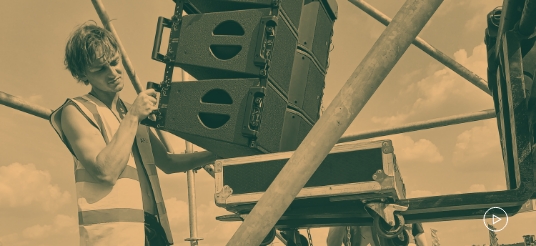
In our 20+ year history, we’ve built a strong network of contacts across the creative industries, that include AMS Neve, Solid State Logic, Avid and many more.
Career support
We strive to equip our students with the skills and opportunities to secure roles across the creative industries, and this goal underpins the student experience at dBs Institute.

Higher Education Environment
Step into a true university setting, where collaboration and a supportive community come together to help you seamlessly transition to the next phase of your academic journey.
dBs Pro
Your Future Prospects
Graduates of the electronic music production degree will possess a diverse range of skills that have applications across the creative industries. For many, working as a music producer is the most obvious route, but your skills will easily transfer into such as producing sound for film, apps and games; mixing and mastering in a studio environment; producing for radio broadcasts and more.
Bristol
Electronic music expert and stalwart of the UK rave and jungle scene, Adrian is a keen experimenter and frequent performer around the country’s festival circuit.
Bristol
Electronic music expert and stalwart of the UK rave and jungle scene, Adrian is a keen experimenter and frequent performer around the country’s festival circuit.
Bristol
Electronic music expert and stalwart of the UK rave and jungle scene, Adrian is a keen experimenter and frequent performer around the country’s festival circuit.
Bristol
Electronic music expert and stalwart of the UK rave and jungle scene, Adrian is a keen experimenter and frequent performer around the country’s festival circuit.
How to Apply
Applications for undergraduate degrees are made through the University and Colleges Admissions Service (UCAS). You can apply online through the UCAS website.
Please note that the UCAS ‘on-time’ application deadline for equal consideration is 31st January 2024.
Entry Requirements
We consider all applications on their own individual merit and potential. All applicants are invited to interview and you’ll be given the opportunity to demonstrate this, along with what inspires and motivates you in your chosen field.
As a guide our typical offer at undergraduate level is 104 – 120 UCAS Tariff points, primarily from Level 3 qualifications such as but not limited to A-levels, a BTEC/UAL Extended Diploma or a Foundation Diploma.
We welcome applications from all subject backgrounds, whether you’ve specialised in STEM, the arts or humanities. If you do not hold the minimum entry requirements but can demonstrate aptitude, enthusiasm and motivation you will be considered on an individual basis. Please contact us for further details.
For applicants whose first language is not English, we accept a variety of English language tests and they are listed on Falmouth University’s International Entry Requirements page.
Fees & Funding
We consider all applications on their own individual merit and potential. All applicants are invited to interview and you’ll be given the opportunity to demonstrate this, along with what inspires and motivates you in your chosen field.
As a guide our typical offer at undergraduate level is 104 – 120 UCAS Tariff points, primarily from Level 3 qualifications such as but not limited to A-levels, a BTEC/UAL Extended Diploma or a Foundation Diploma.
We welcome applications from all subject backgrounds, whether you’ve specialised in STEM, the arts or humanities. If you do not hold the minimum entry requirements but can demonstrate aptitude, enthusiasm and motivation you will be considered on an individual basis. Please contact us for further details.
For applicants whose first language is not English, we accept a variety of English language tests and they are listed on Falmouth University’s International Entry Requirements page.